Behind the clearance rate
We cracked 100 auctions on Saturday across Jellis Craig’s 33 offices, for the first time in a long time.
Volume has been slowly building over recent weeks, with various institutions including Realestate.com.au reporting a busier start to early spring than the 10-year average.
Our clearance rate was a very healthy 79 percent, slightly down on the previous two weeks, which both recorded 81 percent.
The Jellis Craig clearance rate is a great snapshot of the market because we predominantly sell detached homes in the inner and middle suburbs of Melbourne with a median price in the $1,000,000 – 4,000,000 range, depending on the office.
In essence, it means that if you scheduled an auction with Jellis Craig for the 9th of September, you had a 79 percent chance of selling on or before auction day.
Of the remaining 21 properties that did not sell on Saturday, most of these will transact this week or next week, with only a handful of properties that may remain unsold, usually because the vendors are not willing to address price.
The clearance rate is a somewhat rudimentary metric.
If you dig a little deeper, the clearance rate hides a lot of nuances.
Many properties are selling before auction. This week roughly 10 percent of properties sold before auction. In the preceding two weeks, 20 percent sold before auction, which is a very high proportion.
Properties generally sell before auction for two main reasons:
Firstly, there is one stand out buyer and/or limited other interest, so the vendor and agent decide it is less risky to proceed to auction and take the ‘bird in the hand’.
Secondly, there is so much interest that strong offers come early, and the vendor and agent are happy to bring things to a head prior to auction, often with competition.
The former scenario is the more common one in all but the strongest of markets.
Another limitation of the clearance rate is that it measures success in a binary fashion… either sold or not sold.
It does not matter if the property sold for $200,000 below the range with no bidding or sold for $1,000,000 above the range with 10 bidders.
An 80 percent clearance rate only suggests that four out of five properties sold, it does not directly measure the strength of the market in terms of competition (number of bidders per auction) or price (relative to the vendors’ reserve).
Many auctions are currently passing in and then selling in a post auction negotiation. This is normal. It only suggests that the bidding did not meet/exceed the vendors’ reserve and a negotiation was necessary to bridge the gap between buyer and seller.
For example, our Armadale office represented nine auctions on Saturday. Two sold before auction. Two passed in (both now sold). Of the remaining five that sold on Saturday, only one sold under the hammer, with the remaining four selling via negotiation.
This is representative of a healthy, balanced market.
This is as much a reflection of vendors’ expectations than it is of buyer interest and competition.
Even the best house in the Stonnington will not sell if the vendors are wanting 20 percent above the market for it.
Any agent can sell a house when the vendors’ expectations are below the market value. That’s easy.
The best agents are the ones who can facilitate a sale when there is initially a large gap between what a buyer is willing to pay and what a vendor is willing to accept.
That’s what a great agent can do – to test motivation, to educate, to guide through experience and market knowledge, to persuade and encourage, and not to dictate (price) but to negotiate.
A successful negotiation can mean the difference of tens of thousands, sometimes hundreds of thousands of dollars for our clients.
This is why Jellis Craig’s clearance rate is consistently and significantly higher than the broader market. It’s the quality of our agents.
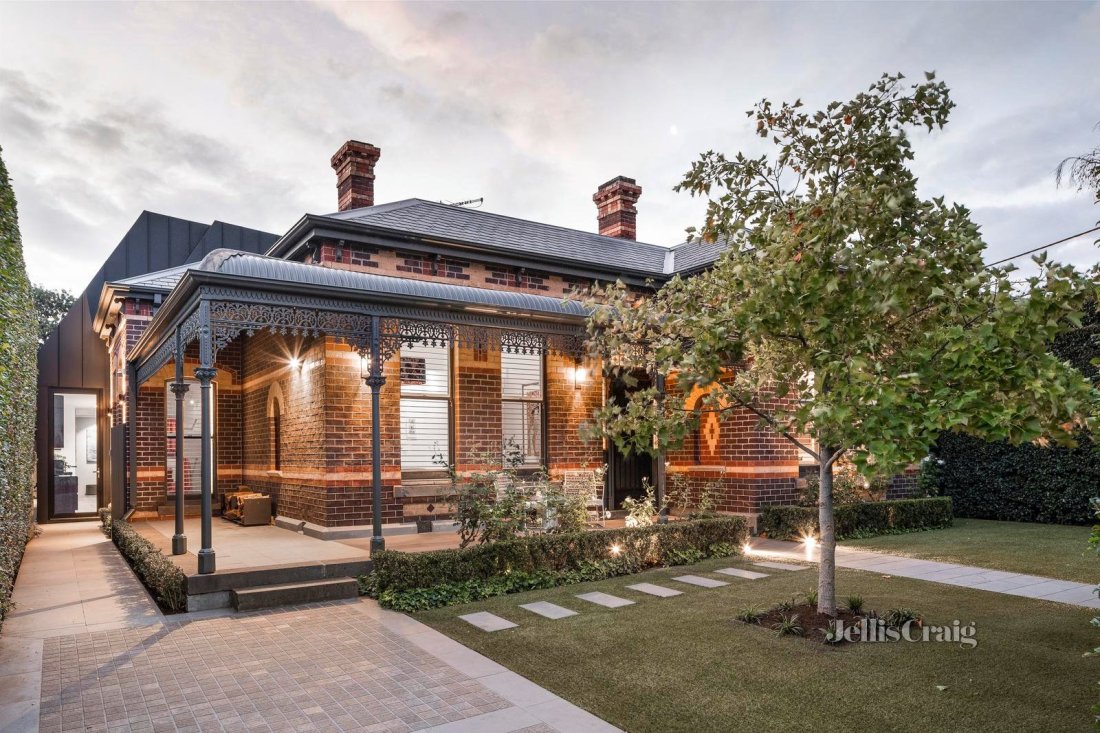
Feature Property: 12 Soudan Street, Malvern


